
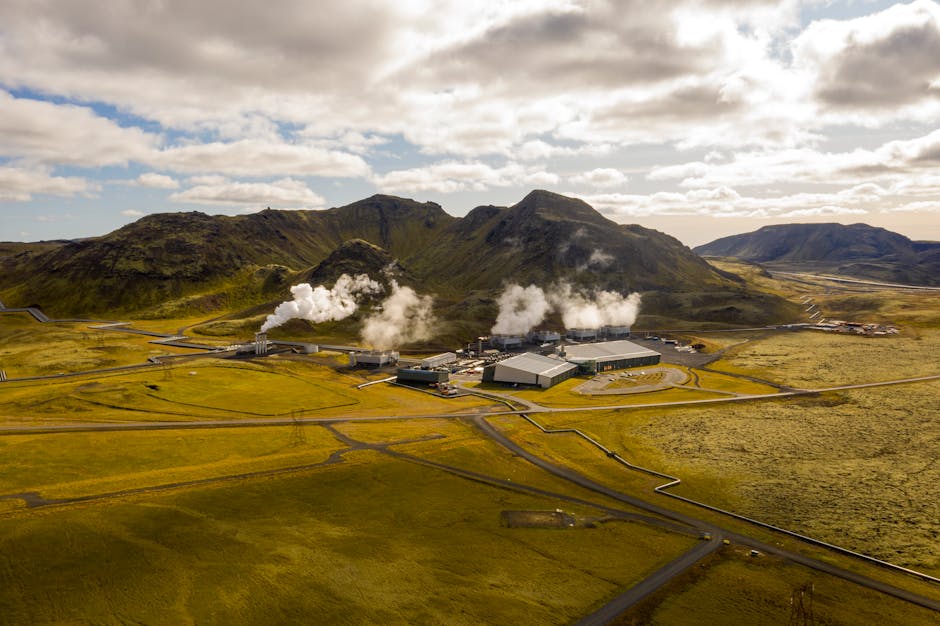
Organic Rankine Cycle (ORC) systems generate electricity from heat sources too low in temperature for conventional steam cycles. By using specialized organic working fluids with favorable vapor pressures at lower temperatures, ORC systems make economic power generation possible from sources that would otherwise be thermal waste.
An ORC system is a closed Rankine cycle that substitutes an organic working fluid, typically a refrigerant or a silicone oil, for water. The lower boiling point of these fluids allows useful work to be extracted from heat sources in the 80 to 300 degree Celsius range, where steam cycles fall apart on thermodynamic and equipment cost grounds. The cycle components are familiar: evaporator, turbine-generator, condenser, pump. The working fluid and the equipment sizing are where ORC engineering earns its keep.
Compressor station exhaust, where midstream operators recover megawatts of otherwise-wasted heat. Industrial process waste heat from furnaces, ovens, and chemical reactors. Geothermal resources in the low to moderate temperature range that cannot support a conventional steam plant. Engine jacket water and exhaust on larger reciprocating engine installations. In each case, the ORC system captures heat that currently vents to atmosphere and converts a meaningful fraction of it into electric power.
ORC systems in practical deployment range from 100 kW packaged units up to 20 MW integrated plants. The sweet spot for many industrial applications is the 500 kW to 5 MW range, where a single OEM package can be dropped onto an existing operation with a bolt-on heat exchanger and a power interconnect. Bell scopes projects across the full range, with the engineering effort driven by the complexity of the heat source integration rather than the ORC package itself.
Bell simulates ORC cycles in ProMax with evaluation across multiple working fluids, pressure ratios, and turbine configurations. Working fluid selection is the central engineering decision in an ORC project. The right fluid is the one that matches the heat source temperature, the rejected heat temperature, and the project’s environmental and safety constraints. Bell evaluates candidate fluids against all of those simultaneously rather than defaulting to whatever the OEM prefers.
The economics of an ORC project are driven by the heat source quality, the price of displaced electricity, and the capital intensity of the integration. Bell scopes ORC projects with the same discipline applied to any industrial capital project: realistic installed cost, realistic operating cost, realistic power production, and honest payback math. For industrial operators looking at ORC as a BEgreen®-aligned carbon reduction option, Bell brings both the thermodynamic modeling capability and the operating-facility knowledge needed to identify good candidate sites.
Rather talk than type? Call now for a consultation (409) 745-2877 View our Capabilities Statement.